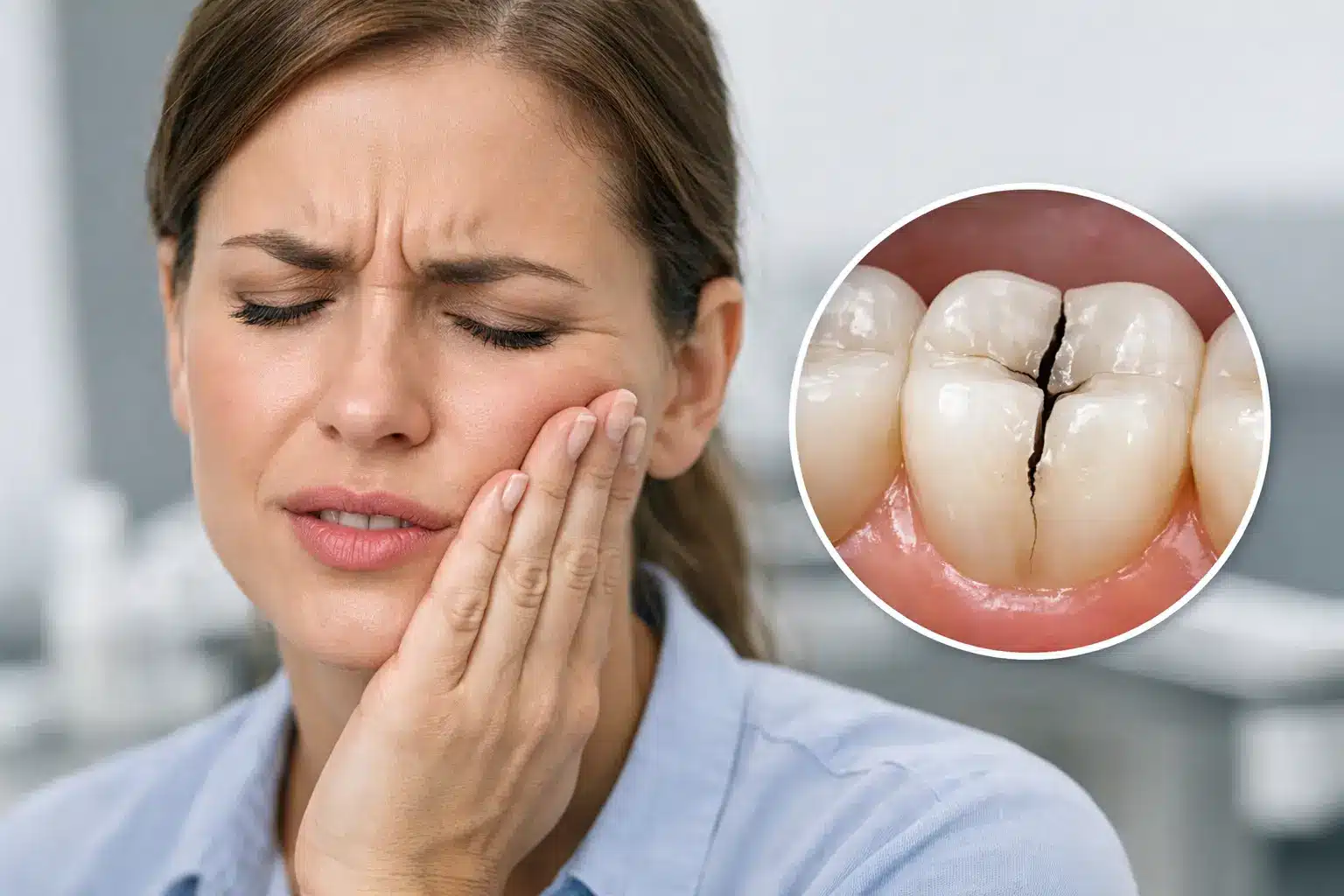
It is that time of year in Surrey. The rain settles in, colds go around the office and the classroom, and suddenly your upper back teeth ache. Is it a cavity? A cracked tooth? Or is your sinus infection causing the tooth pain? The good news is that there are some clear clues that can help you tell the difference, and a quick dental exam can give you a real answer.
At BigSmiles Dental Care, we see this question every cold and flu season. In this guide, Dr. Larry Lu explains why a sinus infection can make your teeth hurt, how sinus tooth pain usually feels compared with a regular toothache, what you can do at home, and when it is time to call a dentist or your doctor.
This article is general information, not a diagnosis. If you are worried about pain, swelling or a fever, please get checked.
Can a Sinus Infection Cause Tooth Pain?
Yes. Your largest sinuses, the maxillary sinuses, sit just behind your cheekbones, right above your upper back teeth. The roots of the upper premolars and molars are very close to the floor of these sinuses, and in some people they reach right up into it. Mayo Clinic notes that pain in the upper back teeth is a fairly common symptom of sinus problems for exactly this reason.
When a cold or allergy leads to sinusitis, the lining of the sinus swells and pressure builds. That pressure can irritate the nerves that also supply your upper teeth, so your brain reads it as a toothache even when the teeth themselves are healthy.

What Does Sinus Tooth Pain Feel Like?
People often describe sinus tooth pain as a dull, heavy pressure rather than a sharp, stabbing pain. Common signs include:
- Several upper teeth ache at once, usually the back teeth, instead of one tooth you can point to.
- The pain gets worse when you bend over, lie down, walk quickly or jump, then eases when you sit upright.
- It can be on one side or both sides, depending on which sinuses are inflamed.
- It comes with cold or sinus symptoms, such as a stuffy nose, facial pressure under the eyes, a headache or post-nasal drip.
- Your lower teeth usually feel fine. The maxillary sinuses sit above the upper teeth, so sinus pressure mainly affects the top row.
Sinus Toothache vs. Regular Toothache: How to Tell the Difference
Sinus pain and dental pain can overlap, so no single sign is a guarantee. Still, this side-by-side comparison covers the patterns we look at first:
| What you notice | More likely sinus-related | More likely a tooth problem |
|---|---|---|
| Where it hurts | Several upper back teeth, hard to pinpoint | One specific tooth, upper or lower |
| What makes it worse | Bending forward, lying down, moving your head | Biting, chewing, or hot, cold and sweet foods |
| How it feels | Dull pressure or a heavy ache | Sharp, throbbing or lingering pain |
| Other symptoms | Stuffy nose, facial pressure, headache | Swollen gum, a pimple on the gum, a bad taste, a chipped or cracked tooth |
| When it eases | As your cold or sinus congestion clears | It usually does not go away until the tooth is treated |
If your pain fits the right-hand column, or you cannot tell, it is worth having your teeth checked. Problems such as a deep cavity, a cracked tooth or an infection at the root tip can feel a lot like sinus pressure, especially in the upper molars.

Can a Tooth Infection Cause a Sinus Infection?
It can work the other way too. Because the roots of the upper back teeth are so close to the sinus, an infection at the tip of one of those roots can spread into the sinus lining. Dentists and doctors call this odontogenic sinusitis, which simply means a sinus problem that started from a tooth.
This matters because sinus medicine alone will not fix a tooth that is causing the problem. If you keep getting sinus symptoms on the same side, or your sinus pain does not clear up, a dental exam with dental x-rays can help rule a tooth in or out. If we do find an infected tooth, treatment such as a root canal can often save it. Our guide to tooth abscess warning signs explains what to watch for.
Sinus Tooth Pain Relief: What You Can Do at Home
If your symptoms point to your sinuses, these simple steps may help you feel more comfortable while the cold runs its course:
- Rest and drink plenty of fluids to help thin mucus.
- Try steam or a saline nasal rinse. HealthLink BC lists saline nasal washes among the home treatments for sinusitis.
- Use a warm compress over your cheeks to ease the pressure.
- Ask a pharmacist which over-the-counter pain reliever or decongestant is right for you, and follow the label.
- Keep brushing and flossing gently. A sore mouth is not a reason to skip your routine.

It also helps to jot down a few notes: when the pain started, which teeth hurt, and what makes it better or worse. If you do come in, those notes make your visit quicker and more useful. For a toothache that is clearly dental, our post on emergency toothache relief covers what helps and what to avoid.
How Long Does Sinus Tooth Pain Last?
Sinus tooth pain usually lasts about as long as the sinus congestion behind it. According to the University of Cincinnati, most sinus infections tend to clear on their own within seven to ten days. As the pressure goes down, the ache in your teeth should fade with it.
If the tooth pain is still there after your cold has cleared, that is an important clue that something dental may be going on.
When to See a Dentist in Surrey (and When to See Your Doctor)
Book a dental visit if any of these apply:
- The pain is in one tooth, or you can point to exactly where it hurts.
- It hurts to bite or chew, or a tooth is sensitive to hot or cold for more than a few seconds.
- Your lower teeth hurt too. Sinus pressure rarely explains pain in the bottom row.
- The pain stays after your cold or congestion has cleared.
- You notice gum swelling, a pimple on the gum, a bad taste or a cracked or broken tooth.
- Your sinus symptoms keep coming back on the same side.
If your teeth and gums look healthy and the pattern points to your sinuses, we will tell you so and suggest you follow up with your family doctor or a walk-in clinic. In B.C., you can also call HealthLink BC at 8-1-1 any time for health advice, with translation in over 130 languages. If you have swelling around your eye, a high fever, confusion or a stiff neck, or swelling that makes it hard to breathe or swallow, call 9-1-1 or go to the nearest emergency department.
For sudden, severe tooth pain or facial swelling that is coming from a tooth, see our emergency dental care page and call us as early in the day as you can.

Get a Clear Answer at BigSmiles Dental Care
You do not have to guess whether it is your sinuses or your teeth. At a dental check-up, Dr. Lu and our team look closely at the painful area, test the teeth involved and take x-rays if needed. Then we explain what we found in plain language, so you know whether you need dental treatment or simply time and care for your cold.
BigSmiles Dental Care is at 18640 Fraser Hwy #107 in Surrey, serving families from Cloverdale, Clayton Heights and Langley. We are open Monday, Tuesday and Thursday from 9:00 AM to 6:00 PM, Wednesday from 9:00 AM to 2:00 PM and Saturday from 9:00 AM to 5:00 PM. Our multilingual team is happy to answer your questions in a language you are comfortable with.
If your upper teeth have been aching this cold season, contact us to book a visit, call (778) 574-8338 or email info@thesurreydentist.com. You can also explore our full range of services. We will help you find out what is really going on and get you feeling better.

With over 15 years of experience, he personally ensures that every patient receives exceptional, individualized care.